How to Integrate SMS APIs for Automated Account Creation (System Interface Layer)
This article defines SMS API integration as a system interface layer in automation environments. It explains how structured requests, response validation, tracking, and failure control maintain reliability under external uncertainty.
What Role Does the SMS API Layer Play Between Input and Execution?
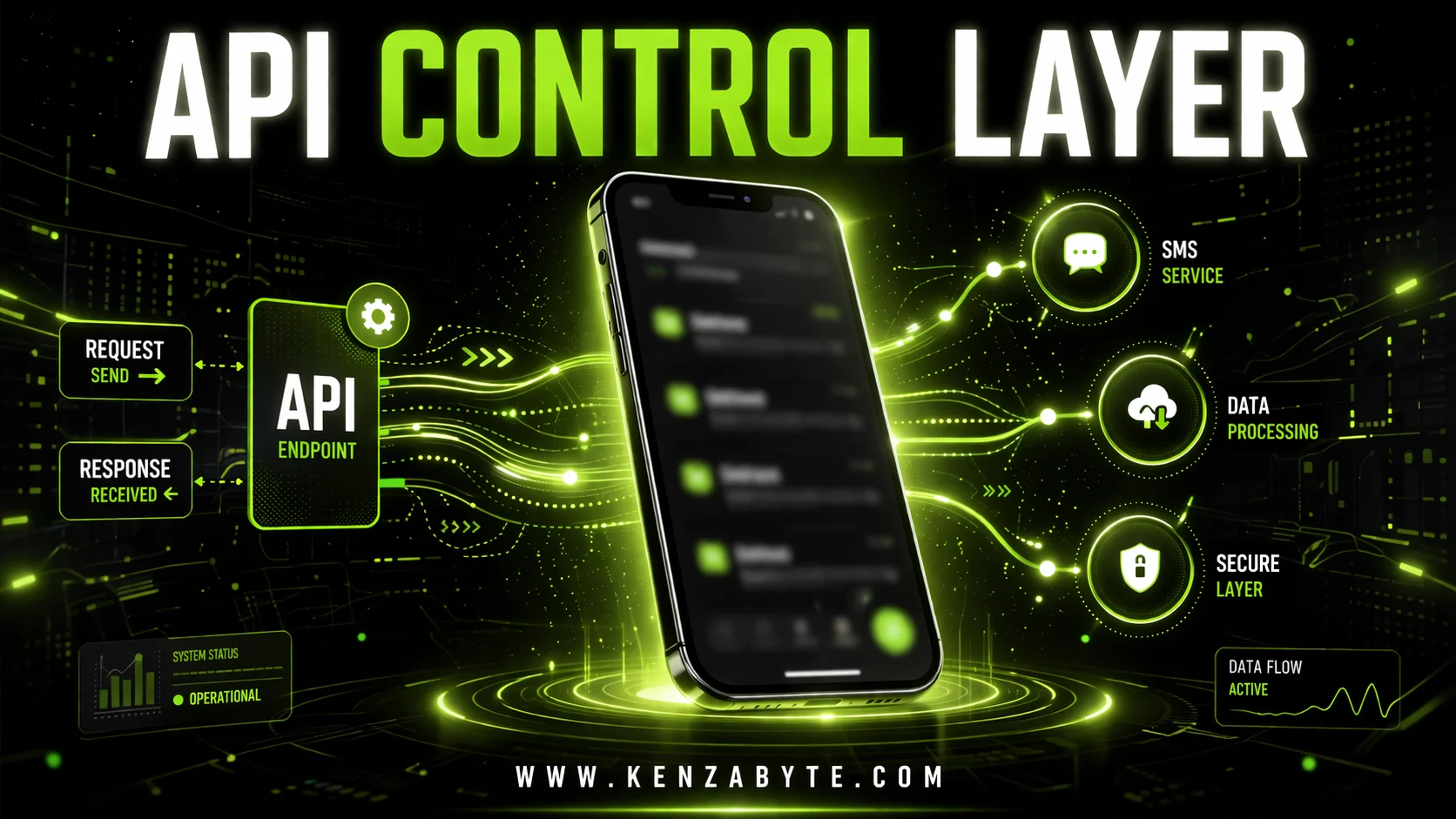
SMS APIs operate outside the execution core. They exist as an external input boundary responsible only for data exchange. The system does not control how data is generated externally, only how it is accepted or rejected internally.
This distinction prevents direct dependency on external behavior. The API layer becomes a controlled checkpoint where all incoming data is filtered before entering the system.
This interface layer connects upstream input sources with downstream execution stages. In a complete Telegram account creation system, it aligns directly with number sourcing, OTP handling, and execution flow control across the pipeline.
Two outcomes define this layer:
- Input is accepted and verified
- Input is rejected and discarded
No intermediate assumptions are allowed. This ensures that execution logic remains stable even when external conditions fluctuate.
How Does the SMS API Communication Model Work?
Integration is based on a fixed interaction model. Every exchange follows a strict contract between the system and the external service.
Each interaction includes:
- A structured request
- A structured response
The system does not adapt dynamically to changing formats. Instead, it enforces predefined schemas for both input and output.
Key components:
- Endpoint definition
- Access credentials
- Parameter structure
- Response format
This creates a deterministic interface where all behavior is governed by structure. Any deviation from the expected format is treated as invalid.
Why Is Authentication Mandatory in SMS API Integration?
Authentication is required for every interaction. It defines whether a request is processed or rejected.
Core elements:
- API key or token
- Transmission method (header or parameter)
This layer performs strict validation before any processing occurs. If authentication fails, the request is terminated immediately.
There is no recovery path within this layer. The system must classify the failure and stop further interaction. Continuing execution without valid authentication introduces inconsistent system states.
How Should API Requests Be Structured for Consistency?
Requests must be constructed with complete and valid parameters. Partial or incorrect input is not tolerated.
Typical parameters include:
- Target service identifier
- Geographic routing information
- Optional constraints, such as filtering rules
The system must validate all inputs before sending them. This avoids unnecessary external calls and reduces failure propagation.
Deterministic behavior is critical. The same request structure must always produce a predictable response format, regardless of outcome. This consistency allows the system to operate without ambiguity.
How Should API Responses Be Interpreted Correctly?
Responses define system behavior. No action should be taken without explicit confirmation from the returned data.
Standard response elements:
- Status indicator
- Data payload
- Reference identifier
The system must rely only on the status field to determine the next step. The presence of data alone is not sufficient.
Typical states include:
- Completed
- In progress
- Rejected
Each state represents a distinct path. Ignoring state boundaries leads to invalid execution decisions.
Why Is Request Tracking Required in API Workflows?
Each request generates a unique reference value. This identifier connects multiple interactions into a single logical operation.
Tracking enables:
- State continuity across calls
- Accurate response matching
- Controlled lifecycle management
Without tracking, responses cannot be reliably associated with their originating requests. This results in inconsistent system behavior and incorrect data handling.
Tracking must remain consistent throughout the entire lifecycle of a request. Identifiers must not be reused or reassigned.
Why Must API Responses Be Validated Before Use?
All incoming data must pass through validation before being used. External responses are treated as untrusted until verified.
Validation checks include:
- Presence of required fields
- Correct data format
- Explicit status confirmation
Invalid conditions:
- Missing required values
- Incorrect structure
- Partial responses
Any response failing validation is rejected. It must not proceed further into execution. This prevents silent errors that degrade system reliability over time.
Validation acts as a gatekeeper between external variability and internal consistency.
How Should API Failures Be Classified?
Failures must be classified before handling. Each type of error originates from a different source and requires a specific response.
Primary categories:
1. Availability Failures: Input cannot be provided due to external limitations.
2. Access Failures: Authentication or authorization issues prevent request execution.
3. Integrity Failures: Returned data does not match the expected structure or content.
4. Timing Failures: Responses are delayed beyond acceptable limits or do not arrive.
Each category must be handled independently. Applying uniform retry logic across all failures reduces efficiency and increases system load.
How Should Systems Respond to Different API Failures?
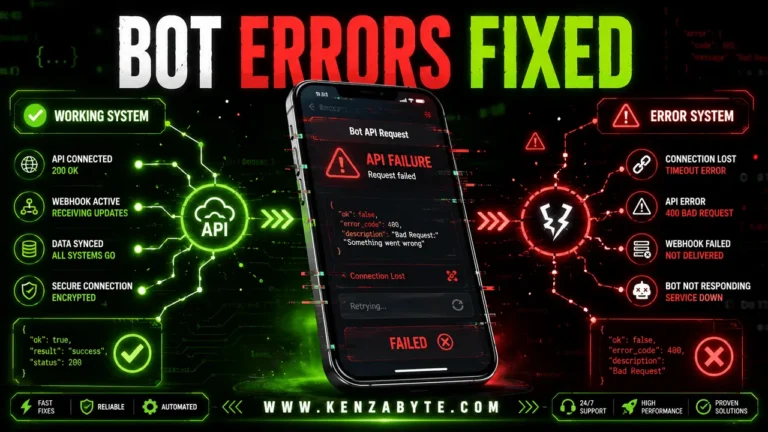
Handling logic must depend on failure classification. The system should not repeat actions blindly.
Control rules:
- Availability issues → modify request parameters
- Access issues → terminate interaction
- Integrity issues → discard response and retry
- Timing issues → enforce timeout and reset
Retries must be limited and structured. Repeating the same failing condition produces no improvement.
Each new attempt must be treated as a separate operation with new tracking. Reusing failed states introduces inconsistency.
Boundary Isolation: Decoupling External Behavior
The API layer must remain isolated from internal execution logic. It should not influence how the system operates beyond data transfer.
This separation ensures:
- External instability does not affect internal workflows
- Internal changes do not impact external communication
All interactions must pass through this boundary. Direct coupling between execution logic and external services introduces fragile dependencies.
A stable system treats the API as an unpredictable external source and enforces strict control at the interface level.
Operational Constraints: External Limitations
SMS API integration operates under conditions that cannot be controlled internally.
Common constraints:
- Variable response latency
- Inconsistent data availability
- Request rate limits
- External system fluctuations
The system must be designed to function correctly within these limits. It must not assume consistent availability or timing.
Stateless request handling improves resilience. Each interaction should be independent, reducing the impact of partial failures.
Stability Model: Characteristics of a Reliable Layer
A reliable integration layer maintains strict control over all interactions.
Key properties:
- Deterministic request generation
- Strict input and output validation
- Explicit state handling
- Structured failure classification
- Controlled retry mechanisms
- Independent request processing
This model ensures that system behavior remains consistent regardless of external variability.
Reliability is achieved through enforcement, not adaptation.
Conclusion: Interface Defines System Reliability
SMS API integration determines whether external data can be trusted. It is not a supporting component but a critical control layer.
A stable implementation requires:
- Structured request construction
- Verified response handling
- Persistent request tracking
- Explicit failure categorization
- Conditional execution control
If this layer fails, invalid data enters the system. Once that occurs, downstream processes cannot maintain consistency.
System reliability begins at the interface boundary.

Arabella Montrose
I have over 8 years of experience in content writing, specializing in Telegram automation, user-friendly tools, and social media marketing services. I work closely with the Kenza Byte team to ensure every article I write is accurate, clear, and genuinely helpful for users and businesses focused on digital growth.