Step-by-Step Telegram Account Creation Workflow (Automation Perspective)
This article presents a structured step-by-step execution flow of Telegram account creation in automation environments, covering the sequence from number assignment to session output.
Introduction
Account creation follows a fixed sequence. Each cycle progresses in a strict order, moving forward only after completion of the previous step. The process does not depend on interpretation or variation. Each step performs a defined action, produces a defined output, and passes control to the next step.
Consistency across cycles is critical. Any break in the sequence results in failure or incomplete output. This workflow describes only the execution path, not system design, scaling behavior, or infrastructure.
Step 1: Number Assignment
A number is allocated before initiation.
Actions:
- Request number via API
- Apply filters such as region, operator, and cost constraints
- Validate availability status from the provider response
- Bind the number to the current process instance
Execution Detail:
The number must be unused and capable of receiving a verification code. Filtering reduces invalid allocations by excluding unsupported regions or unreliable operators. Binding ensures the number is not reassigned during the same cycle.
Result: A valid, reachable number is ready for registration.
Step 2: Registration Trigger
The signup process begins.
Actions:
- Open Telegram interface or API endpoint
- Enter the assigned number in the correct format
- Submit a request for a verification code
Execution Detail:
Input format must match platform requirements, including country code and structure. Submission must occur once per cycle to avoid duplicate requests. After submission, the process shifts into a waiting state for code delivery.
Result: The verification code is sent to the assigned number.
Step 3: OTP Processing
Verification is completed using the received code.
Actions:
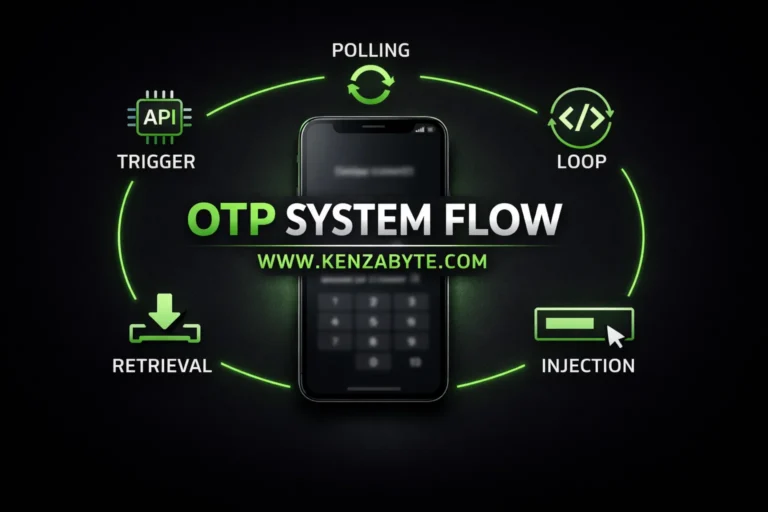
- Continuously monitor the provider API or message stream
- Detect the arrival of OTP linked to the assigned number
- Extract code from the response payload
- Submit code to complete verification
Execution Detail:
Detection must occur within the validity window of the OTP. Parsing must correctly isolate the code from surrounding text or metadata. Submission must match the exact format expected by the verification field. Delayed or incorrect input leads to expiration or rejection.
For deeper insight into improving the success rate at this stage, see: How to Reduce OTP Failures and Improve Retry Efficiency
Result: The number is verified successfully.
Step 4: Account Initialization
Basic account setup is applied.
Actions:
- Assign name fields
- Apply initial profile parameters
- Configure optional attributes if required
Execution Detail:
Values must meet platform constraints such as length and character rules. Optional fields remain minimal to avoid unnecessary variation. Initialization completes only after all required fields are accepted without error.
Result: Account transitions into the active state.
Step 5: Session Extraction
Account is converted into usable output.
Actions:
- Extract session data from authenticated state
- Convert data into the required format
- Store session securely for later use
Session extraction operates within a Telegram automation execution framework where authenticated states are converted into reusable access units aligned with system-level control and reuse patterns.
Execution Detail:
Extraction must occur immediately after activation to capture a valid authenticated session. Format conversion depends on downstream usage requirements. Storage must preserve integrity without truncation or corruption.
Result: Session is available for reuse.
Step 6: Cycle Continuation
Process moves to the next iteration.
Actions:
- Record outcome (success or failure)
- Store execution data for traceability
- Release or archive the used number based on the result
- Proceed to the next number in the queue
Execution Detail:
Logging must capture each step outcome to identify failure points. Successful cycles move forward without delay. Failed cycles terminate and do not proceed to later steps.
Result: Continuous execution across repeated cycles.
Workflow Characteristics
- Fixed order with no deviation
- Each step depends on the completion of the previous step
- No overlap between steps within a single cycle
- Defined checkpoints produce measurable outputs
- Identical structure across all repetitions
Conclusion
The sequence remains constant:
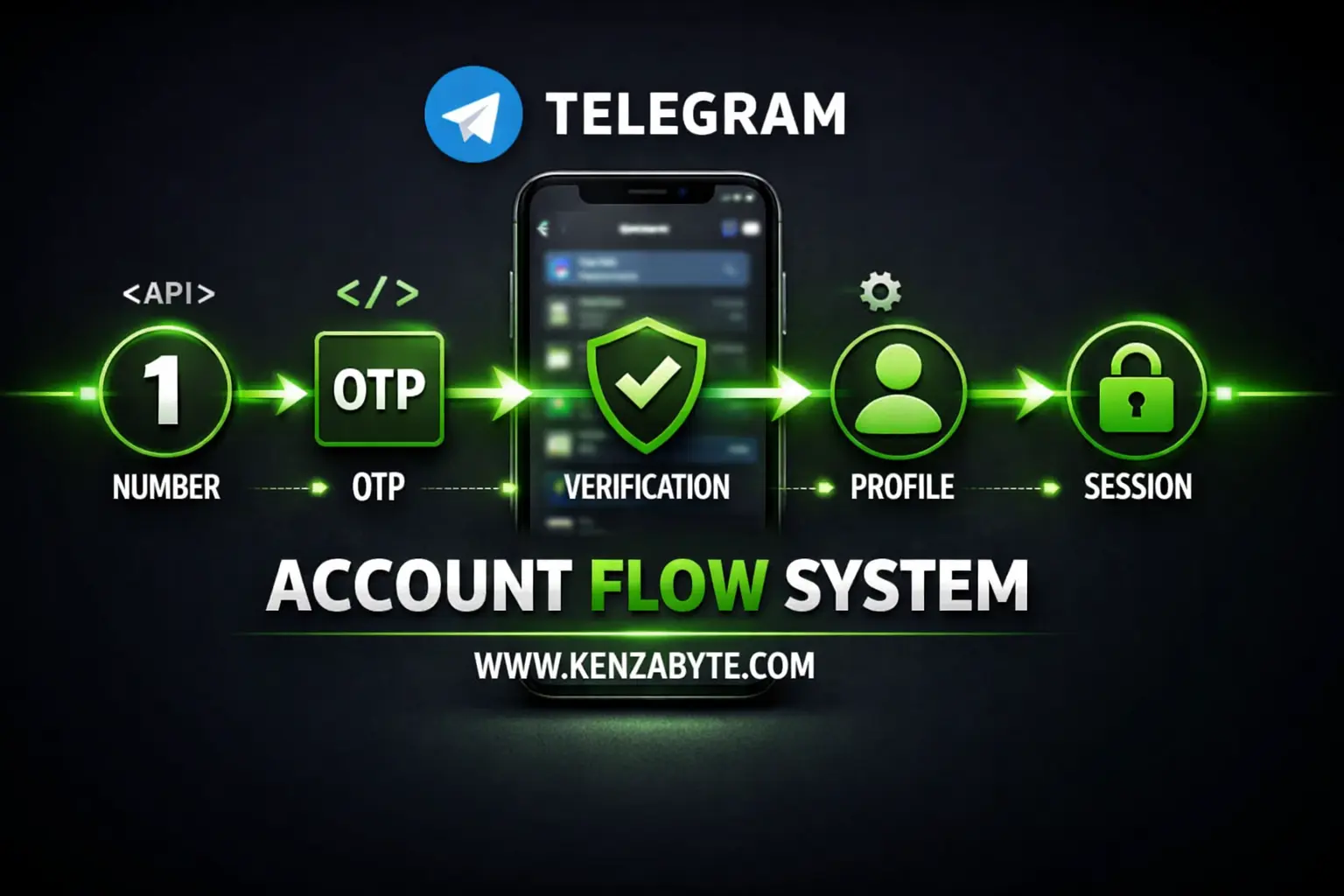
number assignment → registration → OTP processing → initialization → session extraction → continuation
Reliability depends on strict adherence to this order. Any deviation, delay, or incorrect input within a step interrupts the cycle and prevents completion.

Arabella Montrose
I have over 8 years of experience in content writing, specializing in Telegram automation, user-friendly tools, and social media marketing services. I work closely with the Kenza Byte team to ensure every article I write is accurate, clear, and genuinely helpful for users and businesses focused on digital growth.